
A Beginner's Guide to Residential Solar Savings
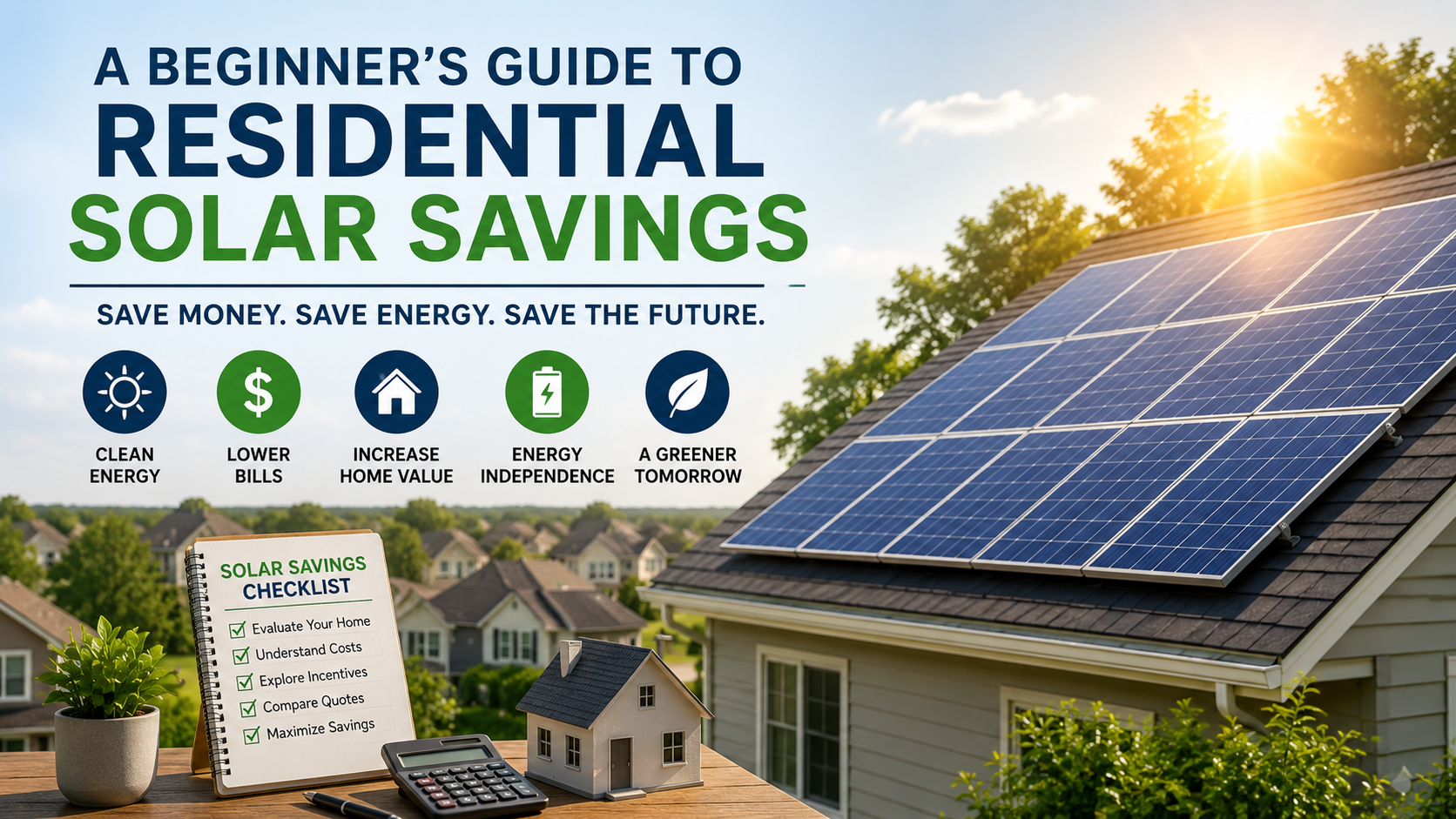
Residential Solar Savings Guide

Residential solar energy has become one of the most discussed home improvement investments in recent years. As homeowners look for ways to reduce utility expenses and improve long-term energy efficiency, solar panel systems continue to attract attention as a potential solution.

While solar technology has existed for decades, advances in equipment, installation methods, and energy management systems have made residential solar more accessible than ever before. Many homeowners are interested in understanding whether solar energy can help lower monthly electricity costs and provide long-term financial benefits.

However, solar energy is not a one-size-fits-all solution. The potential savings and overall value of a solar system depend on numerous factors including geographic location, energy usage, roof conditions, local utility rates, and system design.

This beginner-friendly guide explains how residential solar works, what influences potential savings, important installation considerations, and what homeowners should know before making a decision.

What Is Residential Solar Energy?

Residential solar energy refers to the use of solar panels installed on a home to generate electricity from sunlight. These systems convert solar energy into usable electrical power that can help supply part or all of a household's energy needs.

Most residential solar systems use photovoltaic (PV) panels, which contain solar cells designed to capture sunlight and convert it into electricity.

When sunlight strikes the solar cells, an electrical current is generated. This electricity is then processed through other system components and used to power household appliances, lighting, electronics, and other electrical devices.

How a Residential Solar System Works

Understanding the basic components of a residential solar system can help homeowners better evaluate potential installation options.

A typical residential solar system includes:

Solar panels collect sunlight and generate direct current (DC) electricity. The inverter then converts this electricity into alternating current (AC), which is used by most household electrical systems.

Modern monitoring systems allow homeowners to track energy production and system performance through web-based dashboards or mobile applications.

Why Homeowners Consider Solar Energy

Homeowners explore solar energy for a variety of reasons. While potential utility savings often receive the most attention, solar installations may offer several additional benefits depending on individual circumstances.

Common reasons homeowners investigate solar energy include:

Each homeowner's priorities may differ, making it important to evaluate solar investments based on personal goals rather than generalized assumptions.

Understanding Potential Solar Savings

One of the first questions homeowners ask is how much money solar panels can save. The answer depends on multiple variables and should be approached carefully.

Potential savings are influenced by:

Homes with higher electricity consumption often have greater opportunities to offset utility costs through solar production.

However, savings projections should always be reviewed carefully and based on realistic assumptions.

Evaluating Your Home's Solar Potential

Not every property is equally suited for solar energy production. Before considering installation, homeowners should evaluate several physical characteristics of their property.

Roof Condition

Solar systems are designed to remain in place for many years. Installing panels on an aging roof may create complications if roof replacement becomes necessary shortly afterward.

Homeowners should assess roof condition and address major roofing issues before installation whenever practical.

Roof Orientation

The direction a roof faces can influence solar production. Roofs that receive consistent sunlight throughout the day generally provide stronger production potential.

Shading Considerations

Trees, neighboring structures, chimneys, and other obstructions may reduce sunlight exposure.

Even partial shading can affect overall system performance, making site evaluations an important part of the planning process.

Solar Energy and Household Expense Reduction

Many homeowners view solar energy as one component of a broader strategy to improve household financial efficiency.

In addition to exploring solar opportunities, homeowners may benefit from reviewing other cost-saving strategies discussed in our guide: Smart Ways to Lower Household Expenses in 2026 .

Combining multiple efficiency improvements can often provide greater long-term benefits than focusing on a single upgrade alone.

Understanding Different Types of Solar Panels

Not all solar panels are identical. Homeowners researching residential solar systems will often encounter several panel technologies, each with different characteristics, efficiency levels, and pricing structures.

Understanding these differences can help consumers evaluate proposals more effectively and select systems that align with their goals and budgets.

Monocrystalline Solar Panels

Monocrystalline panels are among the most commonly installed residential solar products today. They are known for their high efficiency, sleek appearance, and strong long-term performance.

Because they generate more electricity per square foot than many alternatives, monocrystalline panels are often attractive for homes with limited roof space.

Polycrystalline Solar Panels

Polycrystalline panels have historically provided a more budget-friendly option for some homeowners.

While they may offer slightly lower efficiency compared to monocrystalline panels, they can still provide meaningful energy production depending on installation conditions.

Thin-Film Solar Panels

Thin-film technologies are less common in residential installations but may be used in certain specialized situations.

These panels are lightweight and flexible but typically require more surface area to generate equivalent amounts of electricity.

What Is Net Metering?

Net metering is an arrangement available in some utility markets that allows homeowners to receive credit for excess electricity generated by their solar systems.

During periods when solar production exceeds household consumption, excess electricity may be sent back to the utility grid. Depending on local regulations and utility policies, homeowners may receive credits that help offset future electricity usage.

Net metering policies vary significantly by location, making it important to review local utility rules before making assumptions about potential savings.

Battery Storage Systems Explained

Solar energy production depends on sunlight availability. Because electricity usage often continues after sunset, some homeowners explore battery storage solutions.

Battery systems can store excess energy produced during the day for use during evenings or power outages.

While battery technology continues to improve, battery systems generally increase overall project costs and should be evaluated carefully based on household needs and priorities.

For some homeowners, battery storage provides peace of mind and additional energy independence. For others, a standard grid-connected system may be sufficient.

The Residential Solar Installation Process

Many first-time solar buyers are unfamiliar with the installation process. While procedures vary between providers, most projects follow a similar sequence.

  1. Initial consultation and site evaluation.
  2. System design and proposal development.
  3. Permit and approval processes.
  4. Equipment ordering and scheduling.
  5. Installation of mounting systems and panels.
  6. Electrical connections and inspections.
  7. Utility approval and system activation.

The overall timeline can vary depending on local regulations, utility requirements, weather conditions, and equipment availability.

Factors That Influence Solar Installation Costs

Residential solar costs vary widely depending on property characteristics and system specifications.

Important cost factors may include:

Because every home is unique, obtaining multiple customized quotes is often the best way to understand expected project costs.

Solar Financing Options

Homeowners typically have several ways to pay for residential solar systems.

Cash Purchases

Paying for a system outright may eliminate financing costs and provide full ownership immediately.

Solar Loans

Financing through a solar loan allows homeowners to spread project costs over time while still owning the system.

Leases and Power Purchase Agreements

Some providers offer leasing arrangements or power purchase agreements (PPAs), where homeowners pay for energy generated rather than purchasing equipment directly.

Each financing structure has unique advantages and limitations that should be reviewed carefully before committing to a contract.

Available Incentives and Tax Benefits

Solar incentives can significantly affect project economics.

Depending on location, homeowners may have access to federal, state, local, or utility-based programs that support renewable energy adoption.

Incentive availability changes over time, making it important to verify current programs through qualified professionals and official government resources.

Homeowners should avoid making purchasing decisions based solely on incentive claims and instead evaluate the overall value of the project.

Why Comparing Solar Quotes Is Important

Solar proposals can vary substantially in pricing, equipment quality, warranties, financing structures, and projected performance.

Comparing multiple providers helps homeowners understand available options and identify proposals that best align with their needs.

Similar principles apply across many major financial decisions. Our guide on Why Comparing Insurance Quotes Matters Before You Buy explains how evaluating multiple offers often leads to better long-term outcomes.

Homeowners should review system specifications carefully and ask questions whenever assumptions or projections appear unclear.

Understanding Solar Return on Investment (ROI)

One of the most important considerations for homeowners is determining whether a solar installation provides sufficient long-term value. Unlike many household purchases, solar systems can continue producing value for many years after installation.

Return on investment depends on numerous factors including installation cost, energy production, utility rates, available incentives, maintenance requirements, and overall system performance.

Homes with higher electricity usage often see greater opportunities for long-term savings because more utility expenses may be offset through solar production.

However, homeowners should view solar as a long-term investment rather than expecting immediate financial results.

Common Solar Myths Homeowners Should Ignore

Myth #1: Solar Works Only in Extremely Sunny Areas

While sunlight levels affect production, solar systems generate electricity in many different climates. Modern panels can continue producing energy even during cloudy conditions.

Myth #2: Solar Systems Are Maintenance Heavy

Most residential systems require relatively little maintenance. Periodic inspections and occasional cleaning are often sufficient for many installations.

Myth #3: Solar Will Eliminate Every Electric Bill

Solar can reduce electricity expenses, but results vary depending on energy usage, utility structures, weather conditions, and system size.

Myth #4: Every Home Is Perfect for Solar

Roof condition, shading, orientation, and local regulations all influence whether a property is a strong candidate for solar energy.

Questions to Ask Before Choosing a Solar Company

Comparing multiple installers is one of the smartest steps homeowners can take before signing a contract.

Asking detailed questions helps homeowners better understand proposals and reduces the likelihood of unexpected surprises later.

Solar System Maintenance Basics

One reason solar remains attractive to many homeowners is that maintenance requirements are generally limited.

Recommended maintenance practices often include:

Most modern systems include monitoring software that helps identify performance issues quickly.

Should You Install Solar Panels?

There is no universal answer. Solar may provide significant value for some homeowners while offering more modest benefits for others.

The best approach is to evaluate your property's characteristics, electricity usage patterns, local utility rates, and financial goals before making a decision.

Taking time to compare installers, understand financing options, and review realistic production estimates can help homeowners make informed choices.

Related Guides

Final Thoughts

Residential solar energy continues to attract homeowners looking for ways to improve energy efficiency and manage long-term household expenses.

Understanding how solar systems work, evaluating property suitability, comparing multiple quotes, and setting realistic expectations are essential parts of the decision-making process.

The most successful solar projects typically begin with research, careful planning, and selecting qualified professionals who can provide transparent information throughout the installation process.

Whether your goal is reducing utility costs, increasing energy independence, or investing in renewable energy, taking time to understand the fundamentals of residential solar can help you make a more informed decision.