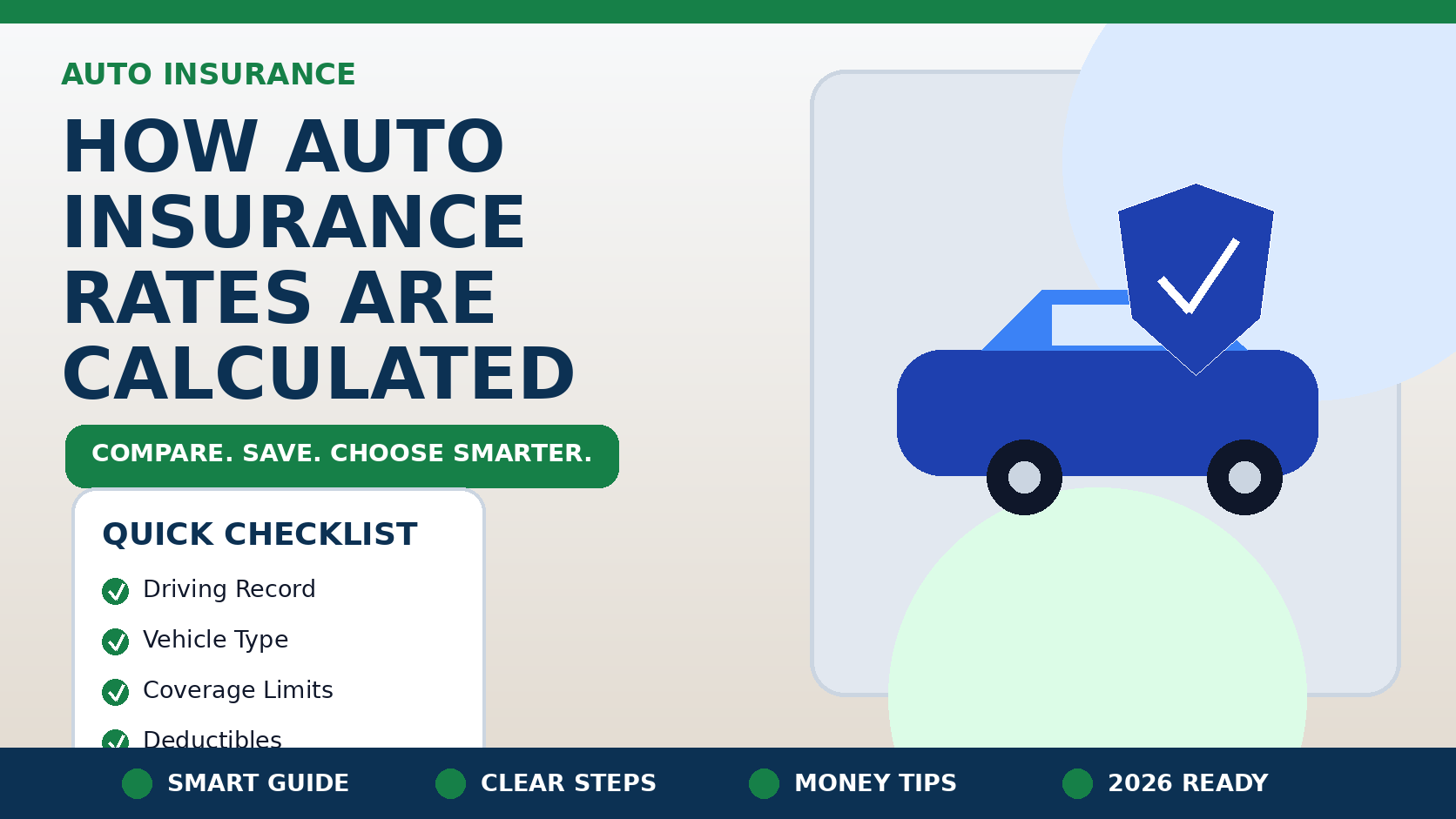
Learn how auto insurance works, what affects premiums, how to compare quotes fairly, and which coverage details deserve attention before you renew or buy.
Editorial note: BetterRateCenter publishes educational consumer guides. We do not provide personalized insurance, legal, medical, tax, or financial advice. Always review current policy documents, provider contracts, and official plan materials before making a decision.
Auto insurance is one of those bills that many drivers pay every month without fully reviewing what is behind the price. A policy can look affordable on the quote screen and still be weak if the liability limits are too low, the deductible is too high, the claims process is slow, or important protections are missing. This resource page is designed to help drivers slow down and compare policies with a clearer method.
The goal is not to push one company or one type of coverage. BetterRateCenter publishes educational guides that explain the common terms, trade-offs, and questions that appear during the insurance shopping process. A useful comparison looks at cost, coverage, service, deductibles, discounts, and real-life risk together. When those pieces are reviewed side by side, it becomes easier to separate a low advertised rate from a policy that actually fits your needs.
These points help readers compare options with more context instead of relying only on a headline price or short sales summary.
Coverage limits matter more than the first monthly price
A premium is only one part of the value. Liability limits, collision coverage, comprehensive coverage, uninsured motorist protection, medical payments or personal injury protection, rental reimbursement, roadside assistance, and deductible choices can all change the usefulness of a policy. When two quotes have different limits, they are not really equal quotes. Start by setting the coverage level you want, then compare prices using that same structure.
Vehicle details can change the rate
Insurers may consider the make, model, age, safety features, repair costs, theft risk, mileage, and usage of a vehicle. A car that is inexpensive to buy may still cost more to insure if parts are costly or claim history is unfavorable. Before buying a new or used vehicle, it can help to request sample quotes so you understand the ownership cost beyond the payment, fuel, and maintenance.
Driver profile and location can affect pricing
Rates may vary because of factors such as driving history, claim history, location, annual mileage, garaging address, and the coverage selections allowed in your area. This does not mean every insurer weighs the same information in the same way. One company may price a driver much differently than another. That is why comparing more than one quote can reveal large differences even when the same driver and vehicle are involved.
Deductibles should match your emergency budget
A higher deductible can lower the premium, but it also means you would pay more out of pocket if a covered loss occurs. The right deductible is not just the one that makes the monthly price attractive. It should be an amount you could realistically handle during an unexpected repair. If raising the deductible creates stress during a claim, the savings may not feel worthwhile.
Discounts should be verified, not assumed
Auto insurers may advertise safe-driver, multi-policy, multi-vehicle, paperless billing, automatic payment, good student, defensive driving, telematics, and loyalty discounts. These can be helpful, but eligibility rules vary. Ask which discounts are included in each quote and whether any discount is temporary. A quote that looks cheaper because of a short-term discount may rise later if the discount expires or driving data changes.
Claims support is part of the product
A policy is most important when something goes wrong. Price matters, but so do claim response, repair network options, communication, and the ease of getting questions answered. Before choosing a provider, review how claims are started, whether digital claim tools are available, and what documents are normally required. The cheapest option may not always be the strongest experience during a stressful claim.
Step-by-Step Comparison Process
Use this process before you request quotes, sign a contract, renew a policy, or choose a provider. It keeps the comparison organized and reduces the chance of overlooking a cost, limit, or rule that may matter later.
List each vehicle, driver, annual mileage estimate, and how the car is used. Quotes are more accurate when the starting information is consistent.
Choose your preferred coverage limits before requesting multiple quotes. Comparing the same limits prevents a weak policy from looking better only because it covers less.
Review deductibles for collision and comprehensive coverage separately. A policy can use different deductible amounts depending on the type of claim.
Ask the company or agent to show discounts clearly. This helps you see whether the price depends on bundling, automatic payments, driving monitoring, or other conditions.
Check the renewal process and how often your rate may change. A good first quote should still make sense when viewed as part of a long-term household budget.
Keep a copy of every quote, declaration page, and coverage summary. Written records make it easier to compare options and ask focused follow-up questions.
Helpful habit: Save quotes, contracts, policy summaries, screenshots, and written answers in one folder. Clear records make future renewals, claims, and provider conversations much easier.
Common Mistakes to Avoid
Many consumer decisions become expensive because the comparison was rushed or based on incomplete information. These common mistakes are worth checking before you commit.
Comparing different limits as if they are equal
One quote may look lower because it includes less protection. Always compare liability limits, deductibles, optional coverages, and exclusions before deciding that one policy is cheaper.
Removing useful coverage without considering risk
Dropping comprehensive or collision coverage may lower the bill, but it can create a larger repair burden after an accident, theft, storm, or vandalism event. Consider the vehicle value and your savings before removing coverage.
Ignoring household changes
Moving, adding a driver, buying a car, changing jobs, or driving more miles can affect insurance needs. A policy that fit last year may not be the best match after a major life change.
Choosing only by brand name
A familiar brand can still be expensive for your specific driver profile. Request quotes from multiple sources and compare the written details instead of assuming the largest advertiser is the best match.
Featured Auto Insurance Articles
Read these related guides for deeper explanations, examples, and comparison tips.
Before making a final choice, walk through this checklist. It is designed to slow down the decision and make sure the most important details have been reviewed.
I understand the main costs, limits, exclusions, and responsibilities before agreeing.
I compared more than one option using similar assumptions and written details.
I reviewed documents instead of relying only on advertising or a short phone explanation.
I know what could change at renewal, during a claim, or after the contract begins.
I reviewed: coverage limits matter more than the first monthly price.
I reviewed: vehicle details can change the rate.
I reviewed: driver profile and location can affect pricing.
I reviewed: deductibles should match your emergency budget.
Frequently Asked Questions
How often should I compare auto insurance quotes?
Many drivers review quotes at renewal or after a major change such as moving, adding a driver, buying a vehicle, or seeing a large rate increase. The point is not to switch constantly; it is to confirm that your current policy still offers fair value for the coverage you need.
Is the cheapest auto insurance policy a bad choice?
Not always. A lower price can be a good value when coverage limits, deductibles, claims support, and company service are still strong. The problem is choosing the cheapest policy without checking what has been removed or limited to reach that price.
What coverage should every driver review carefully?
Liability limits, collision, comprehensive, uninsured or underinsured motorist coverage, medical payments or personal injury protection, rental coverage, and roadside assistance are common areas to review. Requirements and options can vary by state, so check local rules and policy documents.
Can discounts make a big difference?
Discounts can change the final price, especially when several apply at once. However, discount rules vary by insurer, and some may depend on behavior, billing method, bundling, student status, or device-based tracking. Always confirm whether a discount is permanent or temporary.
What documents should I keep?
Keep your declaration page, ID cards, quote summaries, claim communication, payment records, and any written explanation of discounts or exclusions. These documents help you compare renewals and resolve questions later.
Helpful official resources
Use these official or public-information resources to verify rules, coverage details, consumer protections, and eligibility before making a decision.