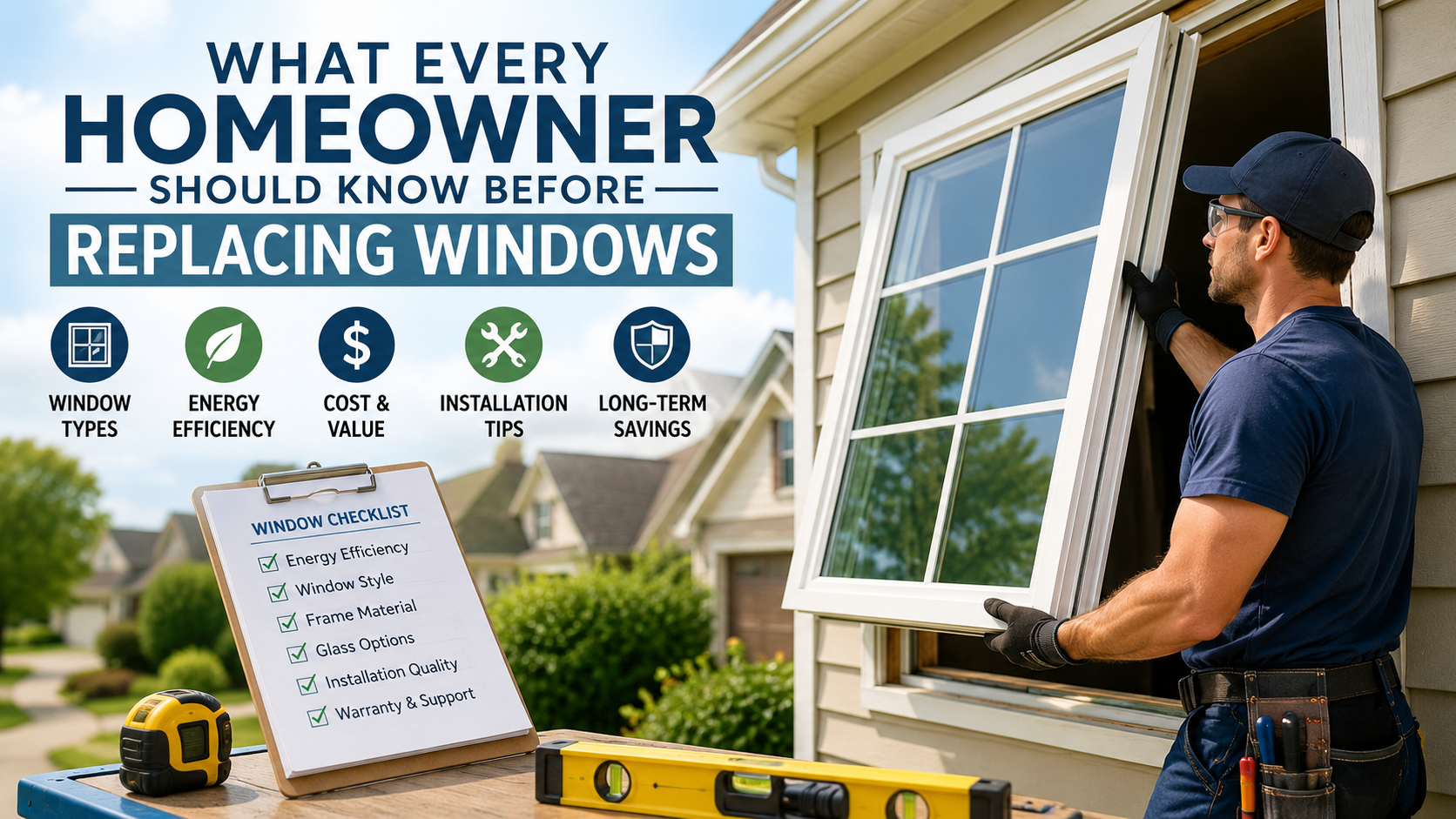
These points help readers compare options with more context instead of relying only on a headline price or short sales summary.
Frame material affects cost and maintenance
Vinyl, wood, fiberglass, composite, and aluminum frames can differ in price, durability, insulation, appearance, and maintenance. Vinyl is often chosen for value and low maintenance, while wood may be selected for traditional appearance. Fiberglass and composite options may offer strength and efficiency but can cost more. The best material depends on climate, budget, home style, and long-term expectations.
Glass packages influence comfort
Double-pane or triple-pane glass, low-emissivity coatings, gas fills, spacers, and solar heat gain ratings can affect comfort and efficiency. A strong glass package can reduce drafts and heat transfer, but the right option depends on climate and window orientation. South-facing glass in a warm region may need different priorities than shaded windows in a cold region.
Installation quality is critical
Even a high-quality window can perform poorly if it is installed incorrectly. Flashing, air sealing, insulation, leveling, anchoring, and trim work all matter. Ask whether the quote includes removal, disposal, interior or exterior trim, damaged wood repair, permits, cleanup, and warranty support. Installation details often explain why one quote costs more than another.
Full-frame and insert replacement are different
Insert replacement may fit a new window unit into an existing frame, while full-frame replacement removes more of the old window assembly. Full-frame work can reveal and repair hidden damage but may cost more. Insert work can be less disruptive when existing frames are sound. The contractor should explain which method is recommended and why.
Efficiency ratings should be compared carefully
Look for ratings such as U-factor, solar heat gain coefficient, visible transmittance, air leakage, and design pressure when available. These numbers help compare products beyond sales language. Efficiency matters, but savings depend on climate, energy prices, existing window condition, installation quality, and how the home is used.
Warranties may cover different things
A window warranty may separate glass, frame, hardware, labor, installation, screens, and seal failure. Some warranties are transferable, while others are limited to the original owner. Read the warranty document and ask who handles service if a problem appears later: the manufacturer, installer, or dealer.