Consumer Resource Hub

Senior Benefits Guides

Explore practical areas where older adults may review savings, benefits, discounts, and local support programs.

← Back to all categories

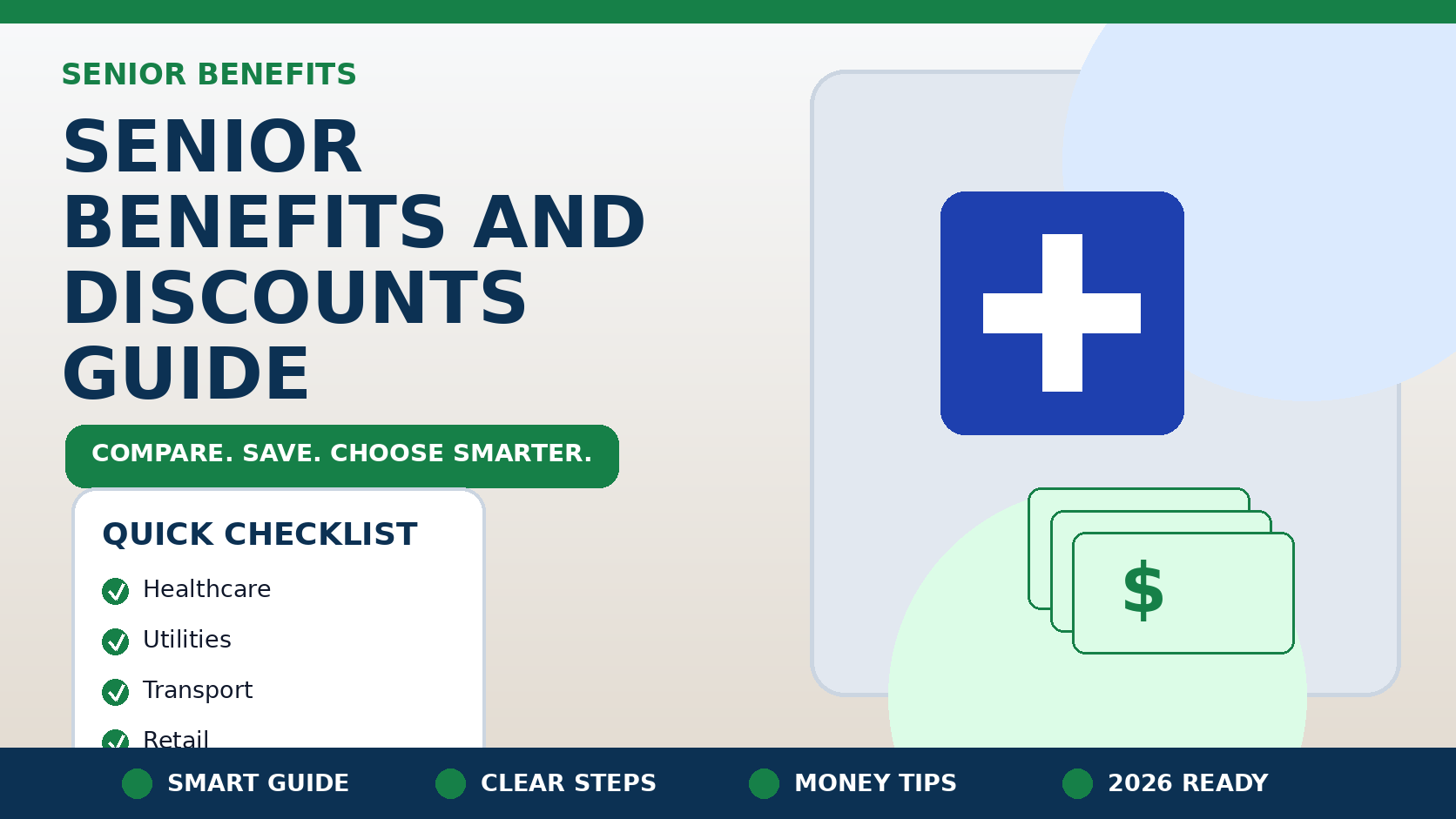
Senior benefits and discounts can vary widely by location, income, age, health needs, veteran status, household size, and program rules. Some benefits are public programs, some are local community resources, and some are private discounts offered by companies. This page helps readers understand where to look and how to organize information before applying or asking questions.

The goal is not to claim that every reader qualifies for every benefit. Instead, this section focuses on practical categories to review, such as healthcare costs, prescriptions, utilities, property tax relief, transportation, food support, internet or phone discounts, recreation, and local nonprofit services. A careful checklist can help older adults and family caregivers avoid missing useful programs.

Key Details to Understand

These points help readers compare options with more context instead of relying only on a headline price or short sales summary.

Eligibility rules differ by program

Some programs are based on age, while others consider income, disability status, household size, veteran status, residence, or medical need. A discount at a store may only require proof of age, while public assistance may require documents and an application. Read eligibility rules before assuming you do or do not qualify.

Healthcare and prescription costs are major review areas

Older adults may have opportunities to compare Medicare coverage, prescription assistance, pharmacy discount options, preventive services, or local health programs. Medication costs can change during the year, so reviewing formularies, generic options, pharmacy networks, and assistance programs can be worthwhile.

Utility and housing programs can be local

Some states, counties, cities, utilities, or nonprofits offer energy assistance, weatherization support, property tax relief, rent help, home repair programs, or emergency aid. Availability can change and often depends on location. Local agencies on aging or community resource centers can be useful starting points.

Transportation savings can improve independence

Senior transportation options may include public transit discounts, paratransit, medical ride programs, volunteer driver networks, or local shuttle services. These programs can help with appointments, grocery trips, and community activities. Requirements and scheduling rules vary, so it helps to apply before transportation becomes urgent.

Documentation saves time

Applications may ask for identification, proof of age, proof of residence, income documents, benefit statements, insurance cards, utility bills, rent or mortgage information, or medical documentation. Keeping a secure folder of common documents can make applications easier for seniors and caregivers.

Benefits should be reviewed yearly

Program limits, income thresholds, enrollment windows, and discount rules can change. A benefit that was unavailable last year may become available later, and a program used previously may need renewal. A yearly review helps keep information current and reduces last-minute stress.

Step-by-Step Comparison Process

Use this process before you request quotes, sign a contract, renew a policy, or choose a provider. It keeps the comparison organized and reduces the chance of overlooking a cost, limit, or rule that may matter later.

  1. List monthly pressure points such as prescriptions, premiums, utilities, transportation, groceries, housing, internet, and home repairs.
  2. Check age, income, location, disability, veteran, and household requirements for each program before applying.
  3. Prepare a secure document folder with ID, residence proof, income records, insurance cards, bills, and benefit letters.
  4. Contact local agencies on aging, community centers, utility providers, pharmacies, and county offices for program details.
  5. Track application dates, renewal deadlines, contact names, and confirmation numbers in one place.
  6. Review benefits annually because rules, income limits, and available programs can change.
Helpful habit: Save quotes, contracts, policy summaries, screenshots, and written answers in one folder. Clear records make future renewals, claims, and provider conversations much easier.

Common Mistakes to Avoid

Many consumer decisions become expensive because the comparison was rushed or based on incomplete information. These common mistakes are worth checking before you commit.

Assuming benefits are automatic

Many programs require an application, renewal, or proof of eligibility. Discounts may not appear unless requested.

Only checking national programs

Local programs can be valuable and are easy to miss. City, county, utility, nonprofit, and state resources may offer support.

Not preparing documents

Missing documents can delay approval. Keep common records organized before starting applications.

Forgetting renewal dates

Some programs require yearly renewal. Missing a deadline can interrupt support or discounts.

How to Organize a Senior Benefits Search

A senior benefits search works best when it is organized by need. Start with the largest pressure points: prescriptions, premiums, utilities, housing, transportation, groceries, internet, phone, and home repairs. Then look for national, state, county, city, nonprofit, and provider-specific programs that match those needs. This method is more effective than randomly searching for discounts.

Caregivers can help by creating a secure benefits folder with identification, residence proof, income documents, insurance cards, utility bills, benefit letters, and application notes. A simple tracking sheet with deadlines, phone numbers, and confirmation details can prevent missed renewals or repeated paperwork.

Questions to answer before moving forward

  • Which monthly cost is creating the most pressure?
  • Is the program based on age, income, location, or health status?
  • What documents are required?
  • Is there an application deadline or renewal date?
  • Can a local agency help with forms?
  • Should benefits be reviewed again after a move or income change?

Quick Review Checklist

Before making a final choice, walk through this checklist. It is designed to slow down the decision and make sure the most important details have been reviewed.

  • I understand the main costs, limits, exclusions, and responsibilities before agreeing.
  • I compared more than one option using similar assumptions and written details.
  • I reviewed documents instead of relying only on advertising or a short phone explanation.
  • I know what could change at renewal, during a claim, or after the contract begins.
  • I reviewed: eligibility rules differ by program.
  • I reviewed: healthcare and prescription costs are major review areas.
  • I reviewed: utility and housing programs can be local.
  • I reviewed: transportation savings can improve independence.

Frequently Asked Questions

What senior benefits should I check first?

Start with the largest monthly expenses: healthcare, prescriptions, utilities, housing, transportation, groceries, phone, internet, and home repairs. These areas often have programs or discounts worth reviewing.

Do all seniors qualify for benefits?

No. Eligibility varies by program and may depend on age, income, location, household size, disability, veteran status, or other factors.

Where can seniors find local help?

Local agencies on aging, county offices, community centers, libraries, nonprofits, utilities, and healthcare organizations can be useful starting points.

What documents are usually needed?

Common documents include ID, proof of age, proof of residence, income records, insurance cards, benefit statements, utility bills, and program-specific forms.

How often should benefits be reviewed?

A yearly review is helpful because income limits, program rules, and discounts can change. Review sooner after a move, health change, or major income change.

Final Review Note

This hub is meant to give readers enough background to make the next click useful. Before leaving the page, compare the topic summary, the checklist, the mistakes section, and the related guide cards. If one of those areas raises a question, open the most relevant guide and save any details you may need when speaking with a provider, contractor, plan representative, or professional adviser.

A strong consumer decision usually comes from patient review rather than pressure. Take time to compare written terms, ask questions, and confirm current details. This habit helps readers avoid thin comparisons and gives the site a clearer educational purpose.

Extra Tips for Reviewing Senior Savings Programs

Senior benefit searches often involve many small programs rather than one single solution. A person may find modest help with prescriptions, utilities, transportation, internet, property taxes, food, or local services. These smaller benefits can still matter when they reduce several bills at the same time. The key is to keep applications organized and avoid assuming that one rejection means no help is available anywhere else.

It is also useful to review benefits after major changes such as moving, income changes, household changes, health changes, or a new insurance plan. Some programs are local, some are income-based, and some change their rules over time. A yearly review helps seniors and caregivers confirm that existing help is still active and that new opportunities have not been missed.