Home Warranty vs Home Insurance: Understanding the Differences
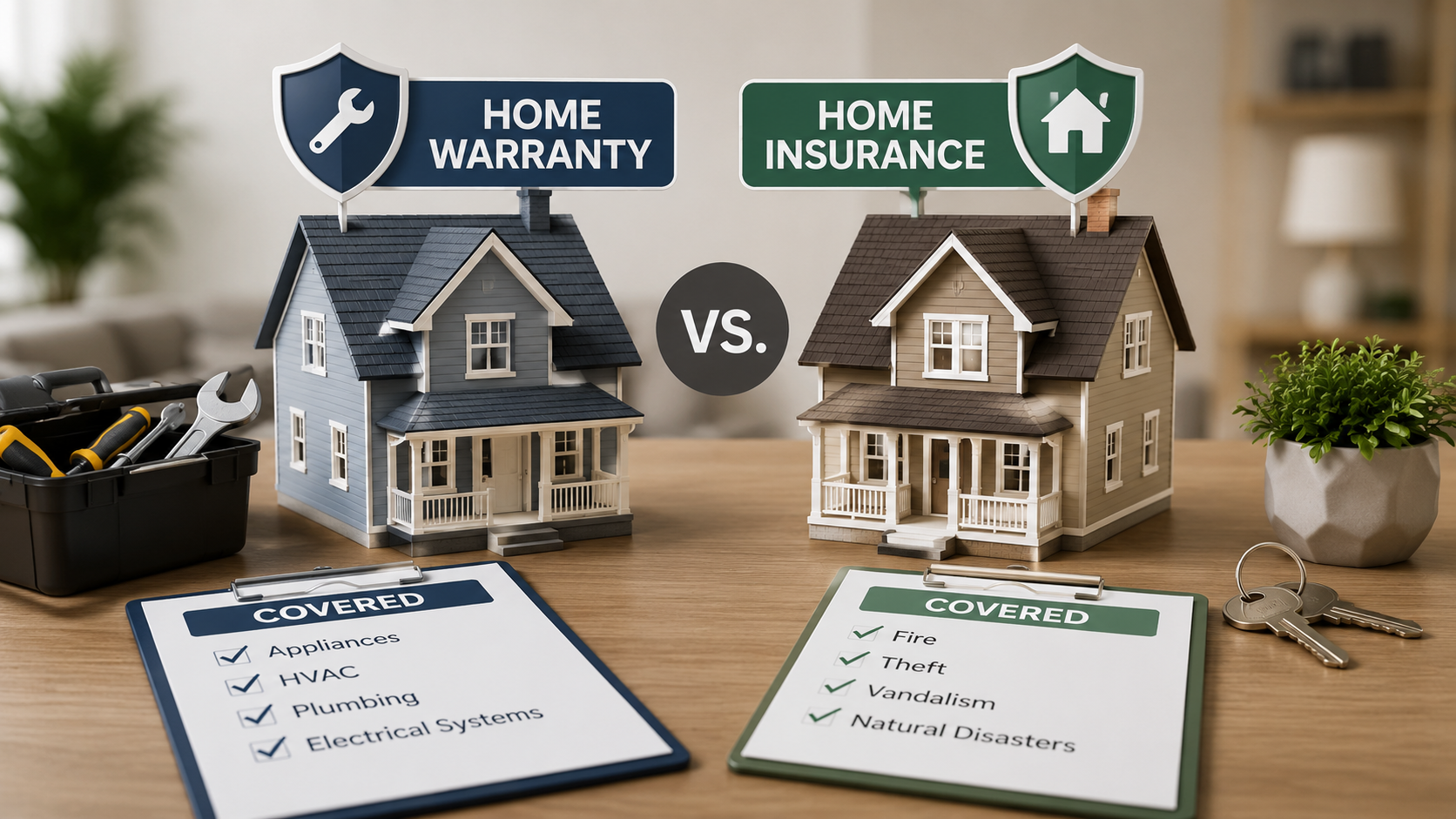
Many homeowners assume that home warranties and home insurance policies provide the same type of protection.
While both products are designed to help reduce unexpected expenses, they serve very different purposes.
Understanding the distinction between these two forms of protection can help homeowners avoid costly misunderstandings and make better financial decisions.
One of the most common mistakes new homeowners make is assuming that a home insurance policy will cover every problem that occurs inside a home.
In reality, home insurance primarily protects against sudden and unexpected events such as fire, wind damage, theft, or certain types of water damage.
It generally does not cover the normal wear and tear of household systems and appliances.
This is where home warranties often enter the discussion. A home warranty is a service contract that may help cover repair or replacement costs for certain household systems and appliances that fail due to normal use.
Although both products can be valuable, they are designed for different situations and should not be viewed as substitutes for one another.
Why This Topic Confuses So Many Homeowners
The confusion often begins because both products involve paying a recurring fee in exchange for financial protection.
Homeowners may hear terms such as coverage, claims, repairs, protection plans, deductibles, and service fees and assume the products operate in similar ways.
In practice, however, home insurance and home warranties address different types of risks.
Home insurance focuses on protecting homeowners from significant financial losses caused by covered events.
Home warranties focus on helping manage repair costs associated with covered home systems and appliances.
Because both products can exist simultaneously, many homeowners choose to carry both forms of protection.
Each addresses a separate category of financial risk.
What Is Home Insurance?
Home insurance is a type of property insurance designed to help protect homeowners from financial losses caused by covered events.
Policies vary by provider and location, but most standard homeowners insurance policies include protection for the structure of the home, personal belongings, liability claims, and certain additional living expenses if the property becomes temporarily uninhabitable.
For example, if a fire damages a home, a covered insurance policy may help pay for repairs or rebuilding costs.
If personal property is stolen during a burglary, the policy may help reimburse the homeowner for covered losses.
Home insurance is designed to address sudden and accidental events rather than gradual deterioration or routine maintenance issues.
Common Situations Home Insurance May Cover
Coverage varies by policy, but homeowners insurance commonly helps protect against events such as:
- Fire and smoke damage
- Windstorms and hail damage
- Theft and vandalism
- Certain types of water damage
- Lightning strikes
- Liability claims involving injuries on the property
- Damage caused by falling objects
While these protections can be extremely valuable, they generally do not cover aging appliances,
worn-out HVAC systems, or equipment that fails due to normal use over time.
What Is a Home Warranty?
A home warranty is typically a service agreement rather than an insurance policy.
It is designed to help homeowners manage the costs of repairing or replacing covered household systems and appliances when they break down due to normal wear and tear.
Depending on the specific plan, a home warranty may provide coverage for items such as heating systems,
air conditioning units, electrical systems, plumbing systems, water heaters, kitchen appliances,
washers, dryers, and other household equipment.
Instead of covering major disasters like fires or storms, home warranties focus on mechanical failures that occur during normal everyday use.
When a covered item fails, homeowners generally submit a service request through the warranty provider.
A service technician may then be assigned to inspect and repair the covered item according to the terms of the contract.
What Does a Home Warranty Typically Cover?
Home warranty plans vary between providers, but most are designed to help cover the repair or replacement of major household systems and appliances that fail due to normal wear and tear.
Coverage details differ from company to company, which is why homeowners should always review contract terms carefully before purchasing a plan.
Many standard home warranty plans include protection for essential systems that homeowners rely on every day.
These systems can be expensive to repair or replace when unexpected breakdowns occur.
Commonly covered systems may include:
- Heating systems
- Air conditioning systems
- Electrical systems
- Interior plumbing systems
- Water heaters
- Ductwork
- Garage door openers
In addition to major systems, many warranty plans also include household appliances.
- Refrigerators
- Dishwashers
- Ovens and cooktops
- Microwaves
- Clothes washers
- Clothes dryers
- Built-in trash compactors
Some providers also offer optional coverage for pools, spas, septic systems, well pumps, roof leak protection, and additional specialty equipment.
What Home Warranties Usually Do Not Cover
One of the biggest misconceptions about home warranties is that they cover every household problem.
In reality, warranty contracts contain exclusions, coverage limits, and service conditions that homeowners should understand before filing claims.
Home warranties generally do not cover:
- Pre-existing conditions
- Improper installations
- Structural damage
- Cosmetic defects
- Code violations
- Manufacturer recalls
- Damage caused by neglect or lack of maintenance
Coverage limitations vary significantly among providers. Reading the full service agreement is often one of the most important steps before purchasing a warranty plan.
Key Difference #1: Covered Risks
The primary difference between home insurance and home warranties involves the type of risk each product is designed to address.
Home insurance focuses on sudden and unexpected events that cause damage to the home or property.
These risks may include fires, storms, theft, vandalism, and other covered incidents.
Home warranties focus on breakdowns resulting from normal use and aging equipment.
Rather than protecting against disasters, they help manage repair expenses associated with covered household systems and appliances.
In simple terms, home insurance protects against unexpected damage, while home warranties help address mechanical failures.
Key Difference #2: Claims Process
Another important distinction involves how claims are handled.
With homeowners insurance, policyholders typically file a claim after a covered event causes damage.
The insurance company investigates the loss and determines whether coverage applies under the policy.
Home warranty claims usually begin with a service request.
The warranty provider may assign a technician to inspect the covered item and determine whether repair or replacement is authorized under the contract terms.
Although both processes involve requesting assistance, the procedures and decision-making criteria differ significantly.
Key Difference #3: Costs and Fees
Home insurance and home warranties also differ in how costs are structured.
Homeowners insurance generally requires monthly, quarterly, or annual premium payments.
Most policies also include deductibles that apply when covered claims are filed.
Home warranty plans typically involve annual contract fees along with service call charges whenever a technician visits to diagnose a covered problem.
Understanding these costs helps homeowners evaluate whether either product aligns with their financial goals and risk tolerance.
A Real-World Example
Imagine a severe thunderstorm damages part of a home's roof and allows rainwater to enter the property.
In this situation, homeowners insurance may help cover repairs if the damage results from a covered peril under the policy.
Now consider a different scenario. A home's air conditioning system stops working after years of regular use.
If the failure results from normal wear and tear and the system is covered by a home warranty contract, the homeowner may be eligible for repair or replacement assistance through the warranty provider.
These examples illustrate why home insurance and home warranties are not direct replacements for one another.
Each addresses a different type of financial risk.
Can Homeowners Benefit From Having Both?
Many homeowners choose to carry both homeowners insurance and a home warranty plan because the products serve different purposes.
Home insurance can provide protection against major financial losses caused by covered events, while home warranties may help reduce out-of-pocket expenses associated with aging systems and appliances.
Whether carrying both products makes sense depends on factors such as the age of the home, the condition of major systems, personal finances, and individual risk preferences.
Advantages of Home Insurance
Home insurance plays a critical role in protecting homeowners from potentially devastating financial losses.
A single covered event such as a fire, severe storm, or major theft incident can result in repair costs that would be difficult for many households to absorb without insurance protection.
Some of the primary advantages of home insurance include protection for the home's structure, coverage for personal belongings, liability protection, and assistance with temporary living expenses when a covered loss makes the property uninhabitable.
For most homeowners, maintaining adequate home insurance is one of the most important financial safeguards available.
Advantages of a Home Warranty
Home warranties offer a different type of financial benefit. Rather than protecting against major disasters, they help homeowners manage the costs associated with repairing or replacing covered systems and appliances.
This can be particularly valuable for older homes where equipment such as air conditioners, furnaces, water heaters, and kitchen appliances may be approaching the end of their expected service life.
Predictable service fees and repair assistance can provide peace of mind for homeowners who want help managing unexpected mechanical failures.
Who Should Consider a Home Warranty?
A home warranty may be worth considering for homeowners who own older systems or appliances, first-time homeowners who are unfamiliar with repair costs, or individuals who prefer predictable maintenance expenses.
Some homebuyers also receive a home warranty as part of a real estate transaction. Sellers occasionally provide warranty coverage as an incentive during the home-selling process.
While warranties are not appropriate for every situation, they can offer financial support when covered household equipment experiences normal wear-related failures.
Who Needs Home Insurance?
Home insurance is generally considered essential for homeowners because it protects against significant financial risks that could otherwise result in substantial losses.
Mortgage lenders typically require borrowers to maintain homeowners insurance throughout the life of the loan. Even homeowners who have paid off their mortgage often continue carrying insurance because of the protection it provides.
Without adequate insurance coverage, a major disaster could create repair or rebuilding expenses that exceed a homeowner's financial resources.
Common Mistakes Homeowners Make
One common mistake is assuming that a home warranty replaces homeowners insurance. These products serve different purposes and should not be viewed as interchangeable.
Another mistake is purchasing coverage without fully understanding the contract terms. Whether purchasing insurance or a warranty plan, homeowners should carefully review exclusions, coverage limits, deductibles, waiting periods, and service fees.
Some homeowners also fail to review coverage annually. As homes age and household circumstances change, protection needs may evolve as well.
Periodic reviews can help ensure that coverage remains appropriate and cost-effective.
How to Decide Which Option Is Right for You
The answer often depends on your specific situation.
If your goal is protecting your home and finances from major disasters, homeowners insurance is generally the primary solution.
If your concern involves aging appliances and household systems that may require repairs due to normal use, a home warranty may provide additional value.
Many homeowners ultimately choose both because each product addresses a different category of financial risk.
Frequently Asked Questions
Is a home warranty the same as homeowners insurance?
No. Homeowners insurance protects against covered events such as fire, theft, and storm damage, while home warranties generally cover repairs and replacements related to normal wear and tear of covered systems and appliances.
Can a home warranty replace homeowners insurance?
No. A home warranty is not a substitute for homeowners insurance and does not provide protection against major property losses caused by covered disasters.
Do I need both a home warranty and home insurance?
Some homeowners choose both because they address different risks. Whether both products are appropriate depends on personal circumstances, home age, budget, and risk preferences.
Does homeowners insurance cover appliance breakdowns?
In most cases, homeowners insurance does not cover normal wear-and-tear appliance failures. Coverage depends on the cause of the damage and the policy terms.
Are home warranties worth it?
Value depends on the age and condition of household systems, repair costs, contract terms, and individual preferences regarding risk management.
Final Thoughts
Home warranties and home insurance are often discussed together, but they are designed to solve different problems.
Home insurance helps protect homeowners from major financial losses caused by covered events, while home warranties help manage repair and replacement expenses associated with covered systems and appliances.
Understanding the differences can help homeowners make informed decisions, avoid coverage misunderstandings, and build a more complete protection strategy for their property.
Before purchasing either product, review policy details carefully, compare providers, and evaluate your home's specific needs.
A well-informed decision can provide valuable financial protection and greater peace of mind.
Related Guides
